Pakistan’s GSP+ (Generalised Scheme of Preferences Plus) status—granted by the European Union—is reportedly facing serious risk as the current cycle nears its end. According to insider sources, concerns over governance, human rights, and political conditions may prevent Pakistan from securing renewal in the next scheme.
This development comes at a time of escalating regional tensions involving Iran, United States, and Israel, adding further complexity to Pakistan’s diplomatic position.
🧾 What is GSP+ Status?
The GSP+ scheme allows developing countries like Pakistan to export goods to the European Union at reduced or zero tariffs, provided they comply with international conventions on:
- Human rights
- Labor rights
- Environmental protection
- Good governance
Originally granted in 2013 for 10 years, the scheme was extended briefly after 2023, and now faces another critical review phase.
⚠️ Why Pakistan May Lose GSP+ Status
The European Union has reportedly raised serious concerns, and Pakistan currently lacks satisfactory responses. Key issues include:
- Allegations of human rights violations
- Restrictions on freedom of expression
- Military courts and judicial interference
- Control over media
- Forced disappearances
- Political repression and treatment of dissent
- Violations of agreements signed with the EU
These factors could become major obstacles to retaining GSP+ status.
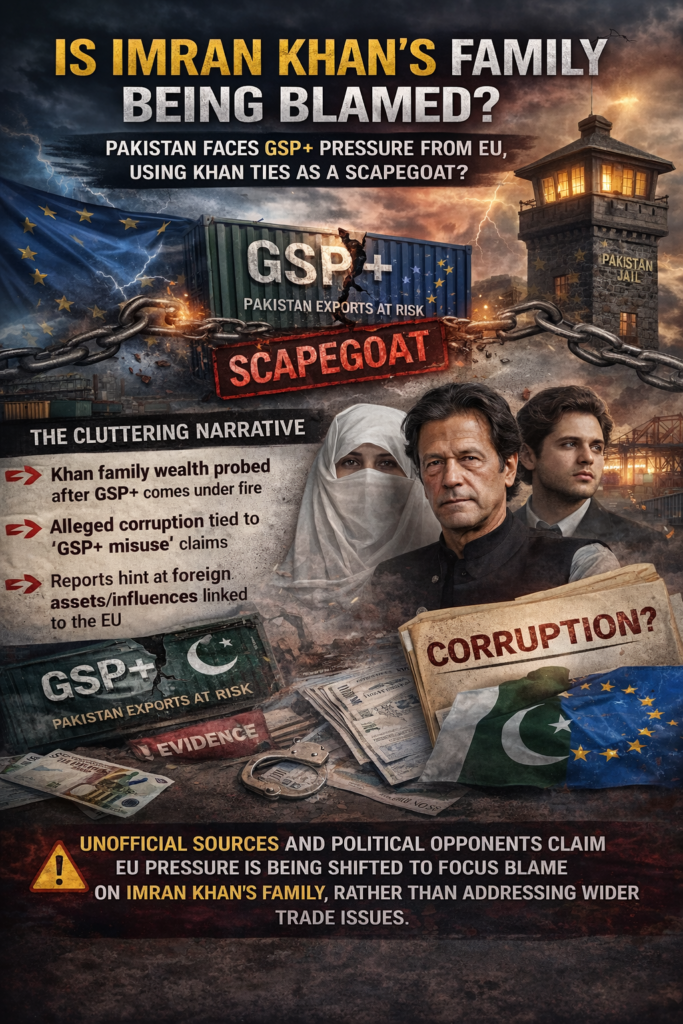
🏛️ Blame Game: Political Narrative
As pressure mounts, attempts are reportedly being made to shift blame onto political figures, including references to the family of Imran Khan.
However, critics argue that such claims are misleading, emphasizing that the GSP+ issue stems from systemic governance concerns rather than individual statements.
🌍 Pakistan’s Diplomatic Efforts
Facing potential economic consequences, Pakistan is expected to:
- Lobby international allies
- Engage with Donald Trump and other global figures
- Attempt diplomatic pressure on the European Union
Despite these efforts, chances of success are considered limited unless structural reforms are implemented.
🔥 Regional Conflict and Strategic Pressure
Pakistan-Iran-Israel Dynamics
Prime Minister Shehbaz Sharif recently held a detailed call with Iran’s president, condemning Israeli attacks on Iranian infrastructure.
However, notably:
- No direct criticism of the United States was made
- Diplomatic language avoided escalation
- Focus remained on regional peace and negotiations
Meanwhile, Iran has issued strong warnings:
- Any attack launched from neighboring countries will be retaliated
- Regional nations must not allow their territory to be used against Iran
🪖 Military Developments
- Iran claims attacks on U.S. bases in Saudi Arabia and Kuwait
- Reports suggest casualties and damage to military assets
- Pentagon is concerned about rapid weapon depletion
- Thousands of missiles reportedly used in recent conflicts
Additionally, U.S. naval deployments, including the USS George H. W. Bush, indicate prolonged conflict preparations.
💰 Oil Prices & Economic Reality
Contrary to claims of massive global price hikes:
- International oil prices have not doubled
- India reduced fuel taxes to provide public relief
- Pakistan increased levies significantly, raising domestic prices
This contrast highlights differing economic strategies during crisis periods.
⚔️ Expanding Conflict Zones
- Hezbollah engaged Israel from Lebanon
- Houthis launched missile attacks
- Regional air defense systems are reportedly weakened
- Missile interception capacity has dropped significantly
🧠 Strategic Analysis
Experts believe:
- Muslim countries risk internal division, benefiting Israel strategically
- Countries like Turkey, Saudi Arabia, and Egypt are attempting to avoid escalation
- Pakistan faces internal instability if directly involved in conflict
🗣️ Statements from Donald Trump
Donald Trump made controversial remarks:
- Claimed responsibility for building a powerful military
- Suggested potential future conflicts, including Cuba
- Expressed desire to be seen as a “peace maker”
Critics highlight contradictions between such statements and ongoing military actions.
🏭 Economic Warfare: Iran vs Israel
- U.S. and Israel targeted Iran’s steel industry (worth ~$6.5 billion in exports)
- Iran responded by threatening Israel’s IT and AI sectors
- Potential escalation into economic and cyber warfare
❓ FAQ
1. What is GSP+ and why is it important?
GSP+ allows Pakistan to export goods to the European Union with reduced tariffs, boosting trade and economic growth.
2. Why is Pakistan at risk of losing GSP+?
Due to concerns over human rights, governance, and failure to meet EU conditions.
3. Can political statements affect GSP+ status?
No single statement can determine the outcome; it depends on long-term compliance with international agreements.
4. How will losing GSP+ affect Pakistan?
It could reduce exports, increase tariffs, and weaken economic stability.
5. Is regional conflict connected to this issue?
Indirectly yes—geopolitical instability affects diplomatic relations and international trust.