Middle East Tensions, Trump’s Strategy & Global Impact — A Deep Analysis (2026)
🌍 Introduction: Why This Crisis Matters Right Now
The global situation is rapidly evolving, and much of today’s news revolves around escalating tensions in the Middle East. To truly understand what’s happening, it helps to look at the bigger picture—geopolitics, energy routes, and shifting alliances.
In this article, we break down the situation in simple, human language—what’s happening, why it matters, and who stands to win or lose.
🗺️ Understanding the Crisis Through the Map
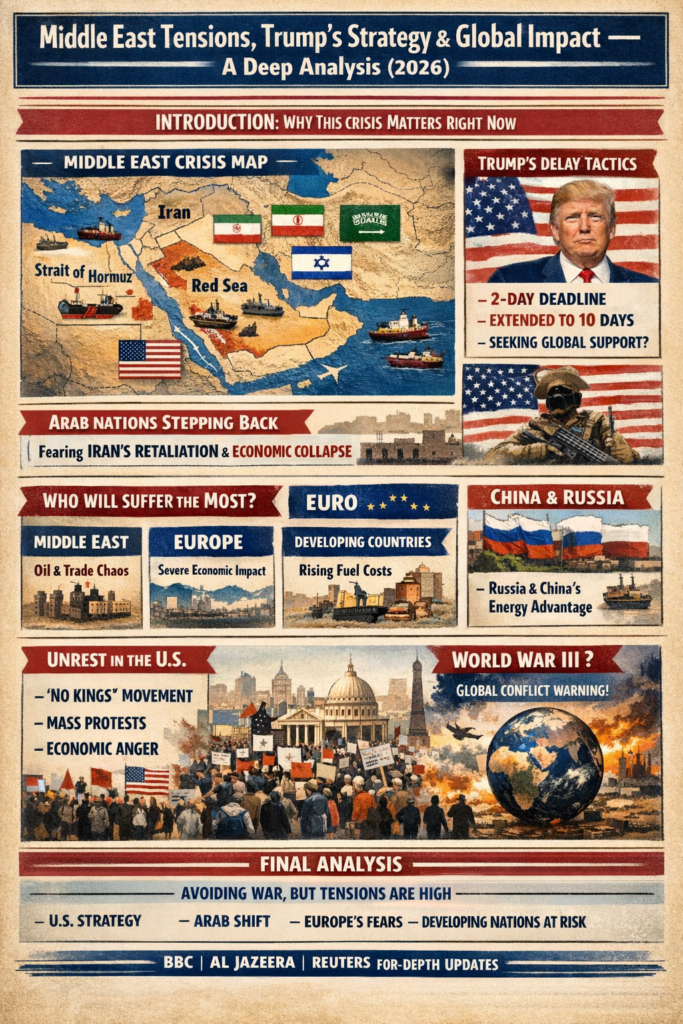
Many of the current developments are tied to geography:
- The Middle East is the heart of global oil and gas supply
- Strategic routes like the Strait of Hormuz and Red Sea are critical
- Military bases and alliances are spread across the region
Countries like Iran, Saudi Arabia, and Israel are central players in this unfolding situation.
⚔️ Trump’s Delays: Strategy or Pressure?
One of the biggest questions right now is:
Why is Donald Trump delaying decisive action?
- Initially, he issued a 2-day deadline
- Then extended it to 5 days
- Later increased it to 10 days
Despite ongoing attacks involving both the U.S. and Israel, there has been no clear Iranian response leading to a ceasefire.
👉 This suggests:
- Trump is trying to buy time
- He may be seeking global support, especially from Arab nations
- Backing out of war now could damage his political standing domestically
🌐 Arab Nations Are Stepping Back
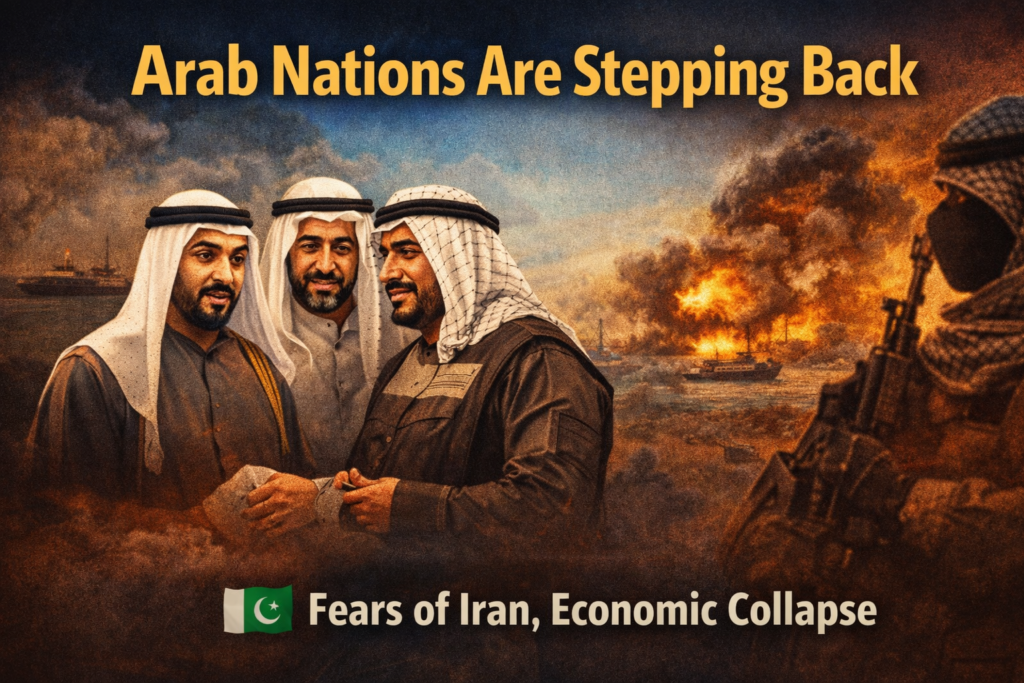
A noticeable shift has emerged among Arab countries:
- Nations like Qatar, United Arab Emirates, and Saudi Arabia are issuing softer statements
- They are increasingly reluctant to join the conflict
Why?
- Fear of Iran’s retaliation
- Risk of economic collapse
- Public opinion in countries like Pakistan strongly opposes joining such a war
Even Pakistan’s establishment appears cautious, realizing that involvement could create internal instability.
💥 Who Will Suffer the Most?
1. Middle East (Biggest Immediate Loss)
If war continues:
- Oil and gas production could halt
- Trade routes may collapse
- Entire economies could suffer
2. Europe (Severe Economic Impact)
Countries in European Union rely heavily on energy imports.
- Oil routes from the Middle East could be disrupted
- Industries in Germany, France, and others may slow down
- Inflation could skyrocket
👉 This is why Europe is trying hard to avoid escalation.
3. Developing Countries (Silent Victims)
Countries like:
- Pakistan
- India
- African nations
will face:
- Rising fuel prices
- Economic instability
- Supply chain disruptions
🇺🇸 What Does the U.S. Gain?
Surprisingly, the United States may benefit strategically:
- It has large oil reserves (including influence in Venezuela)
- It can sell energy to Europe and Asia
- Gains more control over global energy markets
👉 In short:
War elsewhere could strengthen U.S. economic influence
🇨🇳 China & Russia: Quiet Survivors
- China can import energy from Russia and Iran
- Russia benefits from increased demand for its oil and gas
Both countries may navigate the crisis better than others
🇮🇱 Israel’s Long-Term Strategy
Israel plays a unique role:
- Strong global financial backing
- Ability to rebuild quickly despite damage
Historical Context
- 1946: Most land under Palestinian control
- 1947–1967: Expansion of Israeli territory
- Today: Palestinians limited to small regions like Gaza and the West Bank
“Greater Israel” Debate
Some analysts discuss a controversial idea of a “Greater Israel”, expanding influence across neighboring regions. While debated, it reflects deeper geopolitical tensions.
🚨 Rising Pressure Inside the U.S.
Back home, Donald Trump faces growing unrest:
The “No Kings” Movement
- Millions reportedly protesting
- Demonstrations across thousands of locations
Key Issues Raised:
- Authoritarian leadership concerns
- Immigration policies
- Inflation and economic stress
- Foreign policy decisions (especially Iran conflict)
👉 This could be one of the largest protest movements against a U.S. president in recent history
⚠️ Could This Become World War III?
Warnings are growing louder.
Experts, including former officials, suggest:
- If the crisis isn’t resolved quickly
- It could escalate into a global conflict
The scale, intensity, and number of countries involved are increasing rapidly.
🧠 Final Analysis: What’s Really Happening?
- The world is avoiding war, but tensions remain high
- The U.S. is balancing pressure and strategy
- Arab nations are stepping back
- Europe fears economic collapse
- Developing countries may suffer the most
👉 The situation is fragile—one major escalation could change everything
🔗 External Resources (For Further Reading)
- <u>https://www.bbc.com/news</u> – Global coverage on Middle East tensions
- <u>https://www.aljazeera.com</u> – In-depth regional analysis
- <u>https://www.reuters.com</u> – Breaking geopolitical updates
❓ Frequently Asked Questions (FAQ)
1. Why is Donald Trump delaying military action?
He appears to be buying time to gather international support and manage domestic political pressure.
2. Why are Arab countries avoiding war?
They fear economic collapse, public backlash, and retaliation from Iran.
3. Who will suffer the most if war continues?
The Middle East and Europe will face the biggest losses, while developing countries will struggle economically.
4. Can this situation lead to World War III?
Yes, if escalation continues and more countries get involved.
5. How will this affect Pakistan?
Pakistan could face economic pressure, rising fuel costs, and internal instability if the conflict expands.