🔥 Petrol Prices in Pakistan Skyrocket to Rs. 500/Litre: Reality, Comparisons & Political Debate
📊 Current Petrol & Diesel Prices in Pakistan

6
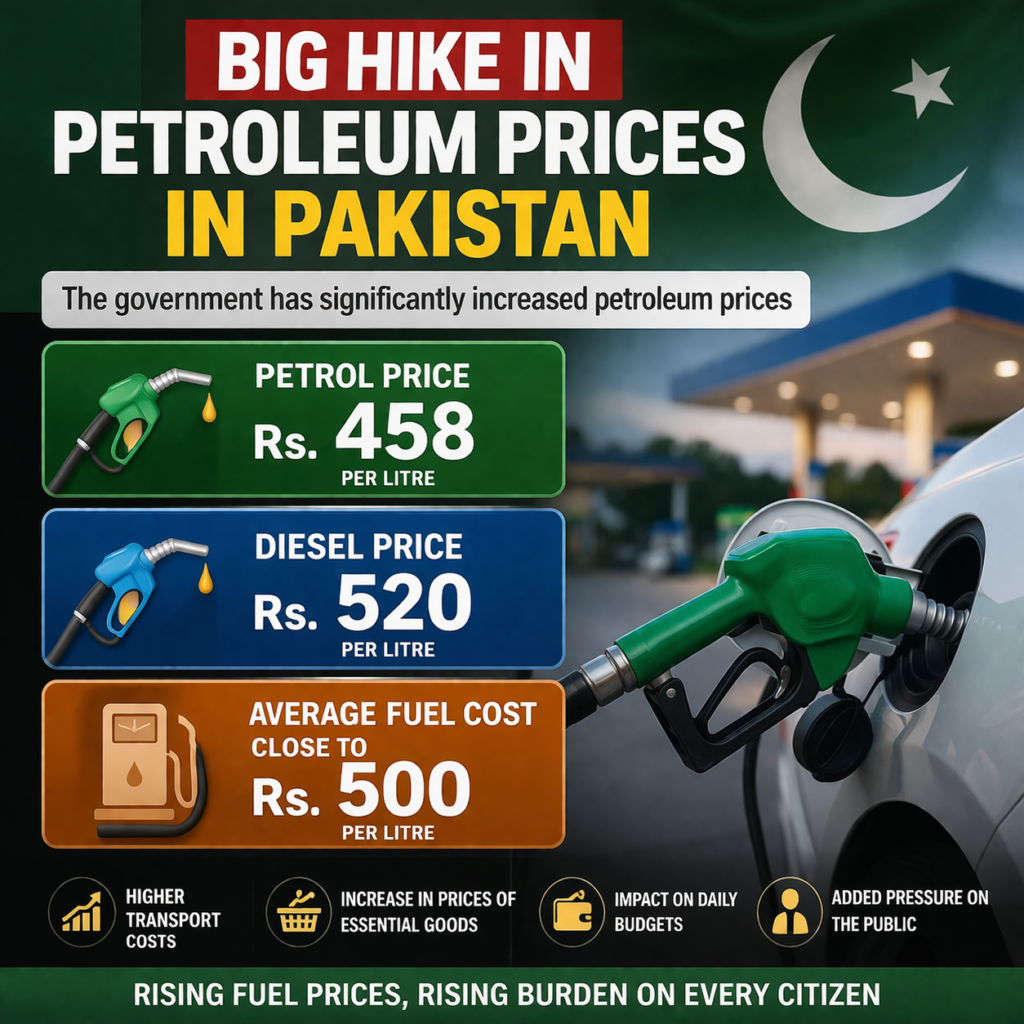
The government has significantly increased petroleum prices in Pakistan. As of now:
- Petrol price: Rs. 458 per litre
- Diesel price: Rs. 520 per litre
- Average fuel cost: Close to Rs. 500 per litre
High-octane fuel prices have surged even higher, making them unaffordable for the average consumer.
The official justification provided by the government is the ongoing regional war situation, which they claim has forced them to raise prices.
🌍 Global Comparison: Is War Really the Reason?


6
Despite the government’s claim, a comparison with other countries raises serious questions.
Countries that import fuel (just like Pakistan) but still have cheaper petrol include:
- India
- Afghanistan
- Bangladesh
- Sri Lanka
- Nepal
- Indonesia
- Japan
- Australia
Even countries without direct sea access like Nepal and Afghanistan have lower fuel prices than Pakistan.
👉 This raises a critical question:
Is the war really the reason, or is it domestic economic mismanagement?
⚖️ Imran Khan Era vs Current Government


6
During Imran Khan’s Government:
- Petrol: Rs. 150 per litre
- Diesel: Rs. 146 per litre
- Global oil prices: Higher than today
- Despite high international prices → Fuel remained affordable
Under Current Government:
- Petrol: Rs. 458 per litre
- Diesel: Rs. 520 per litre
- Global oil prices: Lower than Imran Khan’s era
- Despite cheaper imports → Fuel prices extremely high
👉 Key Argument:
Fuel is being purchased at relatively lower global rates today, yet sold at record-high prices domestically.
🛢️ Cheap Oil Sources Still Available
Pakistan has access to relatively cheaper oil through:
- Iran
- Saudi Arabia
- Russia
Reports suggest:
- Iran has allowed oil tankers for Pakistan
- Saudi Arabia provides oil on favorable terms
- Russia is also available as a supplier
👉 Despite this, prices continue to rise.
📉 Economic Crisis: Why Prices Are Increasing
According to the narrative presented:
Pakistan’s economy is under pressure due to:
- Massive Loans (Debt Trap)
- Heavy Taxation on Salaried Class
- Increased Prices of Essential Commodities
The government is reportedly relying on:
- Loans to cover deficits
- Tax burden on the middle class
- Increasing prices of unavoidable essentials like:
- Petrol
- Diesel
- Electricity
🏦 IMF Pressure and Tax Policies
International Monetary Fund (IMF) has reportedly:
- Set revenue targets
- Pressured Pakistan to increase petroleum taxes
- Influenced fiscal policy decisions
This has led to:
👉 Higher fuel prices
👉 Increased burden on the public
🚜 Impact on Public & Farmers
- Farmers depend heavily on diesel (Rs. 520/litre)
- Wheat harvesting and agricultural operations become expensive
- Transportation costs increase
- Inflation rises across all sectors
👉 Result:
Common citizens face the biggest burden
🌐 Regional Tensions & Geopolitics


7
Global tensions involving:
- United States
- Iran
- Israel
are escalating.
According to reports:
- Infrastructure attacks are ongoing
- Iran has issued warnings and target lists
- Millions of Iranian volunteers reportedly ready for war
This instability affects global oil markets—but again,
👉 Not all countries are passing the burden equally to citizens
⚠️ Conclusion: A Growing Crisis
Pakistan is currently facing:
- Record-high fuel prices
- Economic slowdown
- Reduced business activity
- Increasing public frustration
👉 The key debate remains:
Is this purely a global crisis, or a result of domestic policy failures?
❓ FAQs
1. Why are petrol prices so high in Pakistan?
The government cites regional war and IMF conditions, but critics argue it is due to poor economic management and taxation policies.
2. Are global oil prices higher than before?
No. In fact, during Imran Khan’s tenure, global oil prices were higher than today.
3. Which countries have cheaper petrol than Pakistan?
India, Afghanistan, Bangladesh, Nepal, and many others have lower fuel prices despite importing oil.
4. How does this affect daily life?
It increases transport costs, food prices, and overall inflation, severely impacting the middle and lower classes.
5. Can prices decrease in the future?
Only if economic policies improve, taxation reduces, or global oil prices drop significantly.